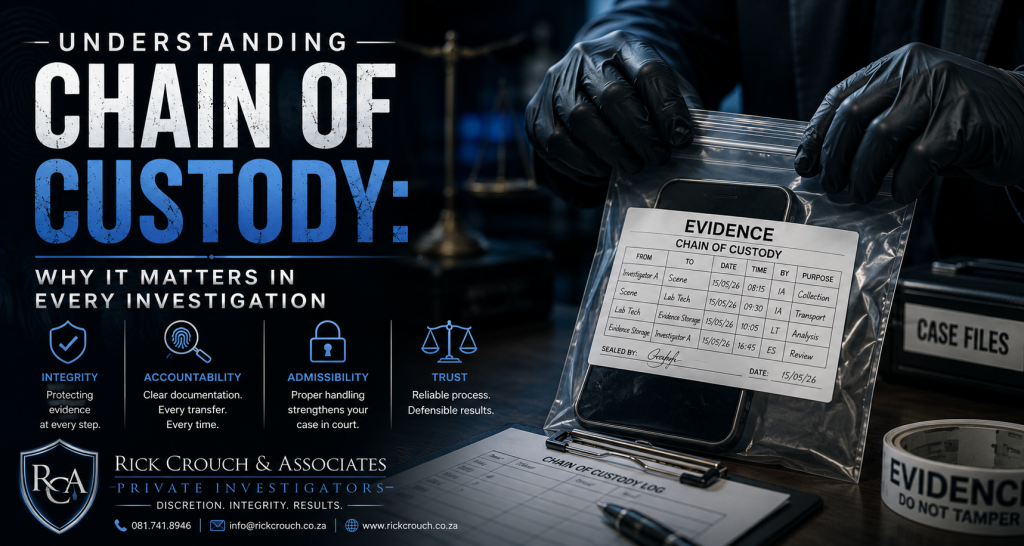
One of the most important principles in any investigation is maintaining the integrity of evidence. This is chain of custody, so understanding chain of custody and why it matters in every investigation is vitally important
Whether the evidence is a mobile phone, computer, document, CCTV recording or physical object, investigators must be able to demonstrate where the evidence came from, who handled it and how it was protected throughout the investigation.
This process is known as the Chain of Custody.
A properly documented chain of custody helps preserve confidence in the authenticity and integrity of evidence and supports transparency throughout the investigative process.
What Is Chain of Custody?
Chain of custody is the documented history of evidence from the moment it is identified until the investigation is concluded or the evidence is returned, transferred or otherwise disposed of in accordance with applicable procedures.
The record documents:
- Who collected the evidence
- When it was collected
- Where it was collected
- How it was packaged
- Who handled it
- When it changed custody
- Where it was stored
- When it was examined
- When it was returned or transferred
Every transfer should be documented.
Why Is Chain of Custody Important?
Without accurate documentation, questions may arise regarding:
- Authenticity
- Integrity
- Alteration
- Contamination
- Loss
- Unauthorised Access
- Mishandling
Maintaining a documented chain of custody demonstrates that evidence has been handled responsibly and consistently.
Types of Evidence Requiring Chain of Custody
Professional investigators commonly apply chain of custody procedures to:
Digital Evidence
- Mobile Phones
- Computers
- Tablets
- External Hard Drives
- USB Drives
- Memory Cards
- CCTV Recordings
- Cloud Data Exports
- Email Archives
Physical Evidence
- Documents
- Photographs
- Storage Media
- Written Notes
- Contracts
- Receipts
- Financial Records
Information Recorded
A professional chain of custody form generally records:
Evidence Reference Number
A unique identifier assigned to the item.
Description
For example:
- Apple iPhone 15 Pro
- Samsung Galaxy S24
- Dell Latitude Laptop
- USB Flash Drive
- CCTV DVR
Identifying Information
Where applicable:
- IMEI
- Serial Number
- Asset Number
- Registration Number
- Barcode
Date and Time Collected
The exact date and time the item came into custody.
Collection Location
Where the evidence was obtained.
Collected By
Name and signature of the investigator receiving the evidence.
Person Releasing the Evidence
The individual providing the evidence.
Condition of Evidence
Examples:
- Powered On
- Powered Off
- Screen Damaged
- Locked
- Sealed
- Water Damage Visible
Packaging
Record how the evidence was secured, such as:
- Evidence Bag
- Tamper-Evident Seal
- Anti-Static Bag
- Protective Case
Storage Location
Document where the evidence is stored while in custody.
Every Transfer Must Be Recorded
Whenever evidence changes hands, record:
- Date
- Time
- From Whom
- To Whom
- Purpose of Transfer
- Signatures
This creates a continuous record of custody.
Chain of Custody for Digital Evidence
Digital evidence presents unique challenges because electronic information can be copied, modified or deleted.
Good practice includes:
- Documenting the device before examination
- Recording identifying information
- Maintaining secure storage
- Creating forensic copies where appropriate
- Examining forensic copies rather than original media whenever practicable
- Recording all examinations performed
Secure Evidence Storage
Evidence should be protected against:
- Loss
- Theft
- Damage
- Unauthorised Access
- Environmental Hazards
Depending on the item, this may include:
- Locked Storage Cabinets
- Secure Evidence Rooms
- Fireproof Storage
- Anti-Static Packaging
- Access Controls
Common Mistakes
Poor evidence handling can create unnecessary questions.
Common mistakes include:
- Failing to document collection
- Missing signatures
- Incomplete descriptions
- Inaccurate dates or times
- Unrecorded transfers
- Improper storage
- Inadequate packaging
- Allowing unauthorised access
Consistent documentation reduces these risks.
Digital Forensic Examinations
When digital devices are examined, investigators should document:
- Device Received
- Condition
- Identifying Information
- Date of Examination
- Examiner
- Examination Methodology
- Evidence Produced
- Storage After Examination
This creates an audit trail of the examination process.
Why Documentation Matters
Professional documentation:
- Demonstrates accountability
- Protects evidence integrity
- Supports transparency
- Assists legal professionals
- Helps explain investigative procedures
- Reduces uncertainty about evidence handling
Detailed records are an essential part of professional investigative practice.
Why Choose Rick Crouch & Associates?
Rick Crouch & Associates follows structured evidence management procedures for digital forensic examinations and investigative assignments.
Our services include:
- Digital Forensics
- Mobile Phone Forensics
- Computer Forensics
- Fraud Investigations
- Corporate Investigations
- Criminal Defence Investigations
- Cyber Investigations
- Litigation Support
Every investigation is supported by careful documentation, professional reporting and evidence management practices appropriate to the assignment.